
Programme of the Faculty of Science and Technology of the UL at "European Researchers’ Night 202"
25 September, 17:00–22:00, free admission
On 25 September 2026, the University of Latvia (LU) Faculty of Science and Technology (FST) invites everyone to explore science in an exciting, interactive event suitable for the whole family!
From 17:00 to 22:00, visitors are welcome at the LU House of Nature (Jelgavas Street 1), the LU House of Science (Jelgavas Street 3), as well as Šķūņu Street 4, Frīdriha Candera Street 1, and Riekstukalns in Baldone, Ķekava Municipality. Throughout the evening, guests will have the opportunity to meet scientists, visit laboratories, and take part in hands‑on workshops, experiments, demonstrations, quizzes, and games.
During the event, visitors will be able to:
- explore Earth’s history, geology, climate, and sustainable solutions;
- learn about nanomaterials, quantum computers, artificial intelligence, and machine learning;
- watch demonstrations in lasers, photonics, spectroscopy, thermography, and optical technologies;
- investigate human vision, perception, skin, blood circulation, and emerging medical technologies;
- discover mathematical and physical principles through interactive tasks and experiments;
- explore astronomy, space research, telescopes, and the Universe;
- engage creatively with natural materials and learn about sustainable use of biomass, energy, and the environment.
A total of 45 research units from UL FST will participate in Researchers’ Night, offering visitors not only the chance to hear about science, but also to see it, try it, and experience it firsthand.
The event is designed for children, young people, families, students, and anyone with a curiosity for science.
Explore the full programme of the event.
See you at the Researchers’ Night!
HOUSE OF NATURE
Jelgavas iela 1, Riga
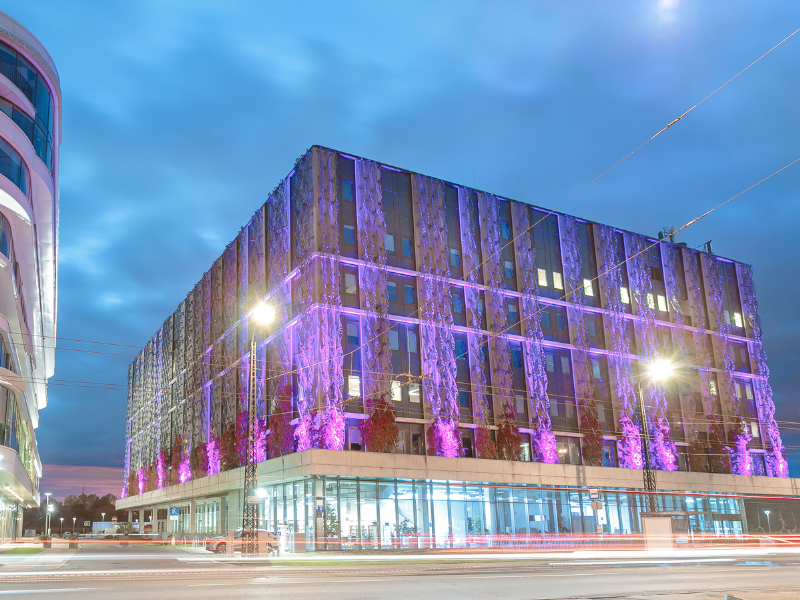
Earth Tells Its Story
Location: 1st floor, Rooms 108/109
Organized by: Department of Geology, Faculty of Science and Technology, University of Latvia
Visitors will have the opportunity to explore the stories told by planet Earth:
- see the past – fossils and ancient environments;
- see the present – soil, groundwater movement, and active processes within the Earth;
- see the invisible – signals and data from vibrations, electromagnetic waves, and magnetic fields.
See with Different Eyes!
Location: 4th floor, Room 427
Organized by: Department of Optometry and Vision Science, Faculty of Science and Technology, University of Latvia
Does the fact that another person also has two eyes mean that they see the world around them in the same way as you do? There are many vision problems, and their range and prevalence have been increasing in recent years. At the same time, solutions are developing alongside these problems. Discover the technologies of the future that will help us see more!
What Is Nano?
Location: 6th floor, Room 604
Organized by: Institute of Chemical Physics, Faculty of Science and Technology, University of Latvia
A relay race and memory game involving the fabrication of nanodevices.
Take a look into a world thousands of times smaller than a human hair! Explore 1D, 2D, and 3D nanomaterials, find out how they are created, and discover where they can be found in our everyday lives. By completing various tasks, you will gradually uncover how nanodevices are made.
Can You Charge Your Smart Devices by Walking?
Location: 6th floor, Room 621
Organized by: Institute of Chemical Physics, Faculty of Science and Technology, University of Latvia
Experiments in generating energy from friction. A demonstration/workshop in which visitors will be able to see an atomic force microscope in action and learn how it can be used to study the generation of electrical energy from friction.
Can You Generate Electricity from Your Body Heat?
Location: 6th floor, Room 621
Organized by: Institute of Chemical Physics, Faculty of Science and Technology, University of Latvia
Can you generate electricity from your body heat? Turn your body heat into electricity! Touch thermoelectric materials, measure the electricity generated, and compete with others to see who can produce the most energy. Find out how a temperature difference can generate an electric current and how body heat can be used to power small devices. You can also step into the role of a battery researcher: assemble a coin-cell battery yourself and learn what it consists of and how energy is stored inside it.
How Can You Touch the Invisible?
Location: 6th floor, Room 621
Organized by: Institute of Chemical Physics, Faculty of Science and Technology, University of Latvia
How can you touch the invisible? Discover a world that our eyes cannot see! Learn about the atomic force microscope, or AFM, which uses an extremely fine probe and a laser to study surfaces at the nanoscale. Find out how information about the properties of materials and cells can be obtained from extremely small vibrations. Can you imagine what it would be like to “touch” the world at the nanoscale?
Reeds for Our Future (+ Reed Straw Workshop)
Location: 3rd floor, Room 301
Organized by: Department of Environmental Science, Faculty of Science and Technology, University of Latvia
We will introduce the ReCreateBiobases project and explore the potential of reeds as a local, renewable raw material. Together with researchers, visitors will be able to get creative with reeds while learning how they can replace fossil-based raw materials and serve as a basis for new products, such as sound-insulation solutions for construction.
- Introduction to the ReCreateBiobases project;
- Creative activities with reeds;
- Potential uses of reeds as a renewable raw material;
- Examples of sound-insulation solutions and other potential products.
Natural Pigment Colour Experiments
Location: 3rd floor, Room 301
Organized by: Department of Environmental Science, Faculty of Science and Technology, University of Latvia
Can you change a colour with just one drop? Find out how natural pigments react to acidic and alkaline environments! Draw on specially prepared pigment-coated paper and watch your drawing change colour. Learn why berries, fruits, and flowers are so colourful and how chemistry allows these colours to change.
A Practical and Theoretical Demonstration of the Biorefinery Cycle
Location: 3rd floor, Room 301
Organized by: Department of Environmental Science, Faculty of Science and Technology, University of Latvia
We will demonstrate how spruce needle residues left over after timber production can be transformed into valuable products in the laboratory. Visitors will learn about the stages of biomass processing, the products obtained, and their potential applications in the development of sustainable materials. The activity will also present research and solutions from the BioPhoT project’s ImmoPREN initiative for using spruce needle biomass to develop new materials.
- Demonstrations of the stages of biomass processing;
- An overview of the products obtained and their potential applications;
- Presentation of solutions developed within the ImmoPREN initiative of the BioPhoT project;
- A discussion about transforming biomass residues into valuable resources.
Natural Colour Laboratory – Materials from the Past for the Art of the Future
Location: 3rd floor, Room 306
Organized by: Department of Environmental Science, Faculty of Science and Technology, University of Latvia
Experience and see how many different colours can be created from clay accumulated at different times and under different conditions. Discover the variety of colours that can be obtained from natural raw materials. Visitors of all ages are invited to paint with their fingers using natural colours derived from clay.
Secrets of the Bog
Location: 3rd floor, Room 313
Organized by: Department of Geography, Faculty of Science and Technology, University of Latvia
Explore the unique ecosystem of a bog and discover the stories about natural history hidden in peat! Bogs preserve evidence of vegetation and climate change over thousands of years, yet they still hold many unanswered questions. During the activity, you will be able to trace the development of a bog by examining peat and determining its moisture content and degree of decomposition. We will examine plant remains under a microscope and try to decipher what they tell us about the past. There will also be both serious and light-hearted stories about bogs. At the end of the visit, you can test your knowledge in a bog quiz, and the most knowledgeable participants will win prizes!
Sustainable Choices for Our Future
Location: 3rd floor, Room 327
Organized by: Department of Environmental Science, Faculty of Science and Technology, University of Latvia
Do you know how to manage resources, sort waste, and care for our planet in your everyday life?
Come and play Sustainability Bingo, test your knowledge, and learn something new!
Let’s play, learn, and build a greener future together!
Plastic Bullies: A Mission for the Future
Location: 3rd floor, Room 327 and the corridor nearby
Organized by: Department of Environmental Science, Faculty of Science and Technology, University of Latvia
Explore visions of the future environment and visit the Climate Learning Point. At the “Plastic Bullies: A Mission for the Future” Climate Learning Point, test your knowledge of climate-friendly actions, complete various tasks, and receive a climate-themed comic. Then continue further to explore the devices and technological solutions that can already help us determine how to manage our homes more efficiently in the future.
Attention – Geography Mafia!
Location: 3rd floor, Rooms 336/335
Organized by: Department of Geography, Faculty of Science and Technology, University of Latvia
Come to Researchers’ Night 2026 and discover the world through the lens of geography! Visit the photo exhibition Passers-by, develop your own idea of the ideal international student in Latvia, explore physical and digital maps, test your knowledge in an exciting Kahoot quiz, and find out where and how geographers work. Discover, participate, and be inspired…
HOUSE OF SCIENCE
Jelgavas iela 3, Riga
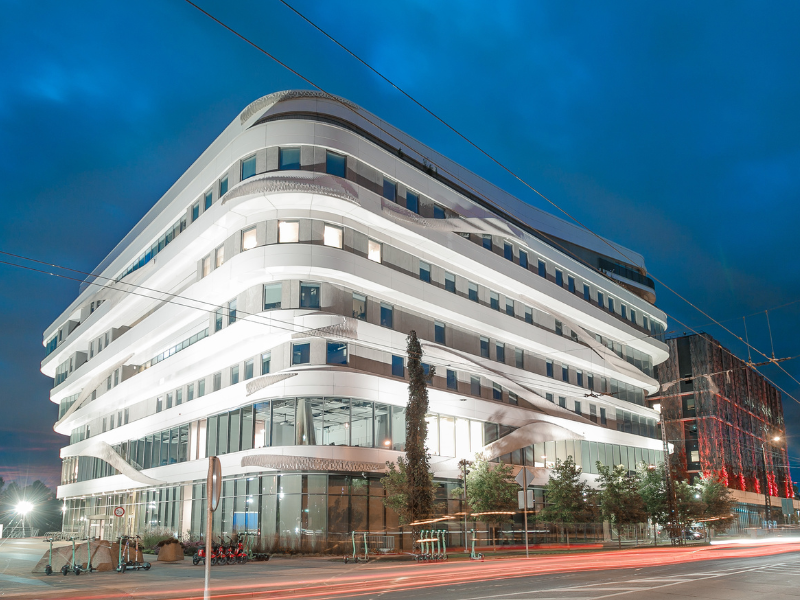
Eye Movement Measurements and Illusions
Location: 1st floor, Room 105
Organized by: Laboratory of Perception and Cognitive Systems, Department of Computing, Faculty of Science and Technology, University of Latvia
- Take part in scientific experiments and games exploring the many aspects of human perception.
- Learn about the research findings of the Laboratory of Perception and Cognitive Systems.
- Discover how researchers study shapes, colours, tastes, emotions, personality traits, haptics, spatial skills, and cross-modal associations.
- Eye movement measurements and illusions.
Muonium: Two Microseconds for an Experiment
Location: 6th floor, corridor outside Room 643
Organized by: Laboratory of Theoretical Physics, Institute of Atomic Physics and Spectroscopy, Faculty of Science and Technology, University of Latvia
- Find out what this exotic atom, muonium, is.
- Discover why physicists study it and what a theoretical physicist can calculate about its interactions with light.
Fuzzy Mathematical Logic – How Can It Be Useful in Everyday Life?
Location: 1st floor, Rooms 103/104
Organized by: Research Group for Fuzzy Mathematical Structures and Technologies, Department of Mathematics, Faculty of Science and Technology, University of Latvia
- Find out whether fuzzy mathematical logic is really as complicated as it sounds.
- Try out decision-support tools.
- Learn about the principles of fuzzy logic and its usefulness in data processing and decision-making.
The Quantum Computer Is Real!
Location: 2nd floor, Room 205
Organized by: Quantum Computing Centre, Department of Computing, Faculty of Science and Technology, University of Latvia
Quantum computers are a reality, and we have a physically accessible prototype with three qubits.
- Watch a quantum computer in action.
- Learn about quantum phenomena such as superposition and quantum entanglement.
- See for yourself how a quantum computer is programmed.
Artificial Intelligence + Sports Science
Location: 2nd floor, Room 205
Organized by: Department of Computing, Faculty of Science and Technology, University of Latvia
A scientific poster/display presenting AI-based facial and voice analysis for monitoring athletes’ emotions and stress.
When Data and Machine Learning Meet Dynamical Systems
Location: 2nd floor, corridor
Organized by: Data-Driven Systems Modelling and Control Group, Department of Mathematics, Faculty of Science and Technology, University of Latvia
Today, increasingly complex dynamical systems are encountered both in technology and in the natural sciences. Machine learning helps us understand this complexity, but models used incorrectly can also be misleading.
- Using simple examples, explore how modern machine-learning methods help model and analyse complex dynamical systems.
The Magic of Mathematics
Location: 2nd floor, corridor
Organized by: Little University of Mathematics, Department of Mathematics, Faculty of Science and Technology, University of Latvia
- Do you know how strong your mathematical thinking is?
- Come and join the Little University of Mathematics team to discover surprising patterns, solve tricky problems, and try out mathematical games.
The Practical Side of Mathematical Statistics
Location: 2nd floor, corridor
Organized by: Laboratory of Statistical Research and Data Analysis, Department of Mathematics, Faculty of Science and Technology, University of Latvia
- Find out how numbers help us understand and predict the world.
- Play chess against a professor and test your strategy against years of refined logic.
- Take part in a probability theory quiz and discover how much of your life is actually determined by chance.
- Explore various Latvian datasets and their analysis.
- Test your ingenuity in an escape game for data experts.
- Try out how future forecasting and classification work.
- See how strategic decisions emerge from a chaos of data!
How Does Heat Become Visible?
Location: 5th floor, corridor
Organized by: Institute of Numerical Modelling (INM), Faculty of Science and Technology, University of Latvia
- Watch everyday and unusual demonstrations using a thermal camera.
- Learn about surface emissivity, the heat capacity of substances, material transparency, and cooling with warm water.
Atomic Lego
Location: 5th floor, corridor
Organized by: Electronic Structure Group, Department of Physics, Faculty of Science and Technology, University of Latvia
Better electronics, brighter LED lights, higher-capacity batteries, and even quantum computers—all of these modern technologies are based, to a large extent, on new materials with special and sometimes surprising properties. One such class of materials is two-dimensional materials: extremely thin structures consisting of just one or a few layers of atoms. How do they differ from the substances we are familiar with? Come and explore the two-dimensional world by building models of these structures with a crystal construction kit!
The Magnet and the Bacteria Disco
Location: 5th floor, corridor
Organized by: Living Materials Group and Magnetic Soft Materials Laboratory, Department of Physics, Faculty of Science and Technology, University of Latvia
Discover the dance of magnets and bacteria! Bring a magnet close to a microscope slide containing a prepared sample and observe the unique dance of magnetotactic bacteria. A camera attached to the microscope will allow even the youngest visitors to observe this fascinating phenomenon. But bacteria do more than dance! The display will also introduce other potential applications of magnetotactic bacteria, such as their role in water purification and microchip systems.
Physics Is Cool
Location: 5th floor, Room 508
Organized by: Young Physicists’ School (JFS), Department of Physics, Faculty of Science and Technology, University of Latvia
- Explore various areas and phenomena in physics.
- Find out why you are more stable on a moving bicycle than on a stationary one.
- Learn how generators actually produce electricity.
- Meet students and young scientists who will answer these and many other questions interactively—from everyday phenomena to things invisible to the naked eye.
Watch Videos, Learn Physics
Location: 5th floor, Room 509
Organized by: Physics Education Research Group, Department of Physics, Faculty of Science and Technology, University of Latvia
- Watch various videos and digital materials for learning physics:
- video experiments and demonstrations from the Physics Olympiad;
- opportunities to learn physics through Khan Academy videos on the LUKA learning platform.
- Learn about the new teaching materials being developed by the University of Latvia for Physics II and for learning physics in primary and secondary school.
- Meet researchers and find out what blended learning is, how videos and digital resources can be used to learn physics, and what is currently relevant in physics education research.
Magneto-Optical Effects
Location: 5th floor, Room 532
Organized by: Laser Centre (LC), Faculty of Science and Technology, University of Latvia
See Your Nose in Laser Light
Location: 6th floor, Room 605
Organized by: Biophotonics Laboratory, Institute of Atomic Physics and Spectroscopy, Faculty of Science and Technology, University of Latvia
- Examine an endoscope that uses three-colour laser illumination.
- Look inside a model of the nasal cavity and find the blood vessels.
Application of Active Thermography in Blood Circulation Monitoring
Location: 6th floor, corridor outside Room 605
Organized by: Biophotonics Laboratory, Institute of Atomic Physics and Spectroscopy, Faculty of Science and Technology, University of Latvia
- Cold versus your blood circulation—which one will win?
- Use a FLIR thermal camera to observe in real time how your hand cools down and then warms up again.
- Try it yourself and find out how quickly your body can restore its temperature after exposure to cold!
Three-Dimensional Assessment of the Human Skin Surface
Location: 6th floor, corridor outside Room 605
Organized by: Biophotonics Laboratory, Institute of Atomic Physics and Spectroscopy, Faculty of Science and Technology, University of Latvia
To assess various skin diseases, such as psoriasis, it is necessary to know what proportion of the body’s total skin surface is affected. This assessment helps the treating physician monitor how the disease changes over time—whether its extent is increasing, decreasing, or remaining unchanged.
- How easy is it to accurately estimate what percentage of the body’s surface is covered, for example, by disease-related redness?
How Can You Protect Your Skin from UV Radiation? (+ Bead Bracelet-Making Activity for Children)
Location: 6th floor, corridor outside Room 605
Organized by: Biophotonics Laboratory, Institute of Atomic Physics and Spectroscopy, Faculty of Science and Technology, University of Latvia
- How can you protect yourself from sunburn?
- Watch demonstrations of the effects of UV radiation.
- Explore light-based methods for the early diagnosis of skin formations.
- Make your own “sunny” bead bracelet.
The Colour Detective
Location: 6th floor, corridor outside Room 605
Organized by: Biophotonics Laboratory, Institute of Atomic Physics and Spectroscopy, Faculty of Science and Technology, University of Latvia
Colour filters help reveal things that are difficult to notice with the naked eye. They “select” certain colours and hide others, so that only specific details stand out in an image. This principle is also used in medicine: green light highlights blood vessels, while red light penetrates deeper into the skin, revealing pigment. During the activity, you will be able to try out colour filters and uncover hidden images and texts.
Step into the Laboratory of the Medicine of the Future!
Location: 6th floor, Rooms 608 and 609, and the corridor
Organized by: Laboratory of Advanced Biomaterials and Biophysics, Institute of Atomic Physics and Spectroscopy, Faculty of Science and Technology, University of Latvia
- Find out how nanomaterials, cells, and artificial intelligence help scientists develop new solutions for treating infections, promoting wound healing, treating cancer, and regenerating damaged tissue.
- Discover how future medical technologies develop from an idea and a laboratory experiment!
- Learn about MXene nanomaterials.
- Examine materials used in research and discover how science helps address important health challenges facing society.
- All projects in the laboratory share one goal: to use modern nanotechnologies, biomaterials, cell biology, and artificial intelligence to address significant medical problems.
The Wind of Green Energy
Location: 6th floor, Room 636 and the corridor
Organized by: Institute of Materials Mechanics (MMI), Faculty of Science and Technology, University of Latvia
Watch demonstrations showing how strong, environmentally friendly composite materials for wind turbines are produced and studied.
Creating 3D Metamaterials
Location: 6th floor, Room 636 and the corridor
Organized by: Institute of Materials Mechanics (MMI), Faculty of Science and Technology, University of Latvia
- Watch the production of 3D-printed honeycomb structures.
- Discover the journey from a digital model to a real specimen.
A Reliable Optical Frequency Standard
Location: 6th floor, corridor outside Room 643
Organized by: Quantum Optics Laboratory, Institute of Atomic Physics and Spectroscopy, Faculty of Science and Technology, University of Latvia
- Microresonators as sensors for exploring the world.
- Lasers for telecommunications applications and the future development of quantum technologies.
- See how an optical wavelength range of 100 nm can be scanned in just a few seconds to obtain the spectrum of an acetylene molecule.
What Can Be Done in the Environment Using Light?
Location: 6th floor, corridor outside Room 646
Organized by: Laboratory of High-Resolution Spectroscopy and Light Source Technologies, Institute of Atomic Physics and Spectroscopy, Faculty of Science and Technology, University of Latvia
- Find out how artificial intelligence learns to recognise atomic spectra.
- Can you recognise different spectra?
- Discover what can be detected using ultraviolet light and how it can be used to destroy bacteria and viruses.
- Find out whether mercury is present in you and in the surrounding environment, and whether it is dangerous.
Meet the Phosphor
Location: 6th floor, Room 649
Organized by: Laboratory of Optical Biosensors and Functional Nanomaterials, Institute of Atomic Physics and Spectroscopy, Faculty of Science and Technology, University of Latvia
- Find out what a phosphor is and where phosphors are used.
- Watch 3D-printing demonstrations.
- Take part in optical testing.
Artificial Intelligence in Everyday Life and Research: Demonstrations
Location: 7th floor, Room 712
Organized by: Institute of Astronomy, Faculty of Science and Technology, University of Latvia
So, How Did You Spend Your Summer? CERN Summer School 2026
Location: 7th floor, Room 714
Organized by: Laboratory of Atomic Physics, Atmospheric Physics and Photochemistry, Institute of Atomic Physics and Spectroscopy, Faculty of Science and Technology, University of Latvia
- Meet master’s students from the Department of Physics who attended the CERN Summer School this summer.
- Find out how to “touch” the atomic nucleus and learn what the much-discussed Higgs boson is.
- Ask the students whether there is life after visiting CERN.
- Discover the areas of nuclear research in which Latvian researchers are world-class “stars”.
Come Visit the Telescope
Location: 7th floor, Rooms 717, 726, and 725
Organized by: Institute of Geodesy and Geoinformatics (GGI), Faculty of Science and Technology, University of Latvia
- Enter the telescope control room.
- Examine the equipment used to track satellites, space debris, and asteroids.
- Learn about the methods scientists use to identify and track objects that may affect Earth and the geospace environment.
VESTA Digital Zenith Camera – Photographing the Stars
Location: 7th floor, Rooms 717, 726, and 725
Organized by: Institute of Geodesy and Geoinformatics (GGI), Faculty of Science and Technology, University of Latvia
- Watch the VESTA digital zenith camera in operation. By photographing stars, it can be used to determine Earth’s gravitational field.
- Find out how images of stars help us study Earth!
Demonstrations will take place every half hour.
Outside the UL Academic Centre
LIGHT AND MATTER
Photonics Science and Space Research. Photonics and Photons — the Driving Force of the 21st Century
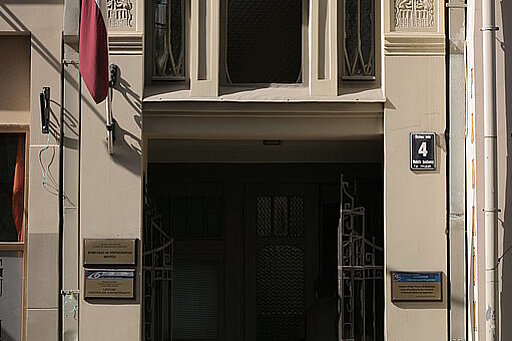
Šķūņu iela 4, Riga
Photonics Science and Space Research. Photonics and Photons — the Driving Force of the 21st Century
Location: Šķūņu Street 4, Old Riga
How to get there: Google Maps
Time: 17:00–22:00
Organised by:
UL National Science Platform for Photonics and Space Research FOTONIKA‑LV
UL FST Institute of Atomic Physics and Spectroscopy — Laboratory of Atomic Physics, Atmospheric Physics and Photochemistry
Arnolds Ūbelis, Dr. Phys., Head of NZP FOTONIKA‑LV and ASI Laboratory
Sequential Researchers’ Night programme for NSP FOTONIKA‑LV guests at Šķūņu Street 4:
A) Stories and an interactive discussion with visitors in the auditorium on the 4th floor:
about light and photons
- about photonics and space sciences and participation in research
- about photonics and space‑sector companies in Latvia and the work carried out there
B) After the discussion — visits to specific laboratory rooms according to each visitor’s interests:
photon interactions with atomic and molecular beams
- electromagnetic levitation experiments
- getting acquainted with photons
- fused‑quartz glass technologies
- what microelectronics is
- student club
Specially invited:
upper‑secondary school students and their parents
- students and young people dreaming of future studies
- professionals working in photonics and space‑related fields
- casual visitors, including Latvians living abroad
- unexpected guests
For smoother coordination:
Visitor groups larger than 10 people are kindly asked to register by writing to Arnolds@latnet.lv
LIVING IN THE FUTURE
A Journey Through the Universe in the Planetarium
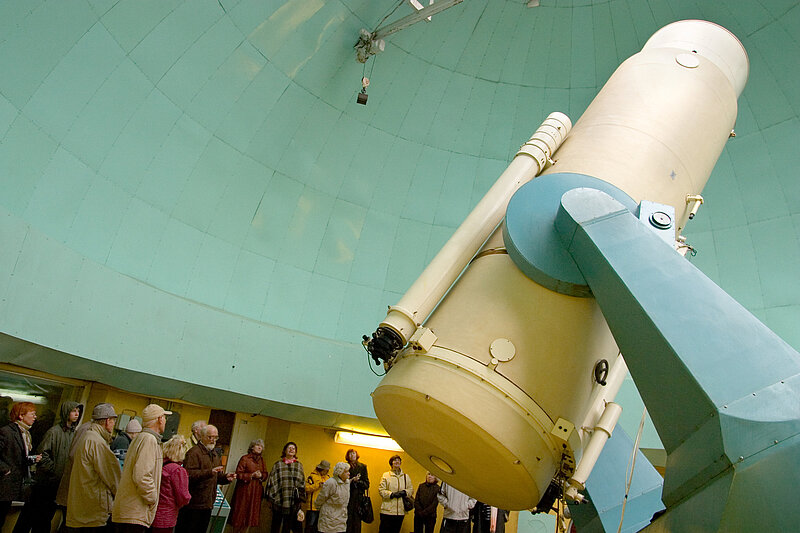
UL FST Institute’s of Astronomy Baldone Observatory, Ķekava Municipality, Baldone Parish, Riekstukalns
Journey Through the Universe in the Planetarium
Location: Ķekava Municipality, Baldone Parish, Riekstukalns – Baldone Astrophysics Observatory
Organised by: Institute of Astronomy, Faculty of Science and Technology, University of Latvia; Baldone Astrophysics Observatory
Visitors will embark on an exciting journey through the Solar System and the starry sky inside the planetarium. This interactive session offers the chance to explore planets, constellations, and celestial objects, as well as learn fascinating facts about the Universe and astronomy.
DATA ART
Engineer Fridrihs Canders and 3D Avatars
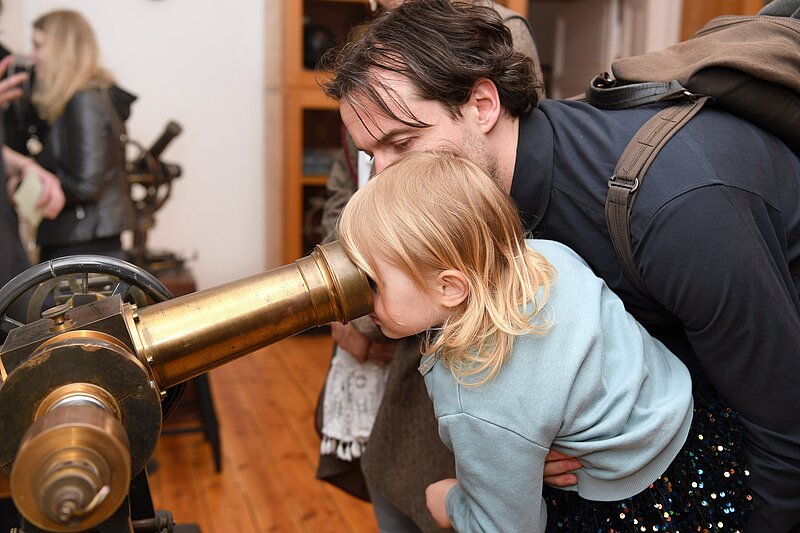
Fridrihs Canders Memorial Museum, Fridrihs Canders iela 1, Riga
Engineer Fridrihs Canders and 3D Avatars
Location: Fridrihs Canders iela 1, Riga
Organised by: Department of Computer Science, Faculty of Science and Technology, University of Latvia, and the University of Latvia Museum
Do you know who Latvia’s "Elon Musk" is? He grew up in Riga, and his childhood home still holds stories about his life. Today, this house hosts a scientific study on predicting body measurements and avatars. Anyone can participate in the research by voluntarily providing their data — and in return, receive their own 3D avatar.