The Status of Term Creation Between Science and Practice: Arguments for Its Classification as Research Activity*
Term creation in contemporary linguistics occupies an intermediate position between practical language planning and theoretical linguistic inquiry. This borderline status raises the question of whether the process of term creation should be classified as a research activity. Although terminology development is often perceived as a technical task associated with the creation and harmonisation of terms, in-depth analysis demonstrates that a substantial part of term creation meets the criteria of scholarly research. Therefore, term creation should be regarded as research work at least in those stages where conceptual analysis, modelling of terminological systems, and interdisciplinary conceptual investigation are carried out.
Theoretical Foundations of Term Creation
Terminology as a field of study is grounded in methods of conceptual analysis that are characteristic of both linguistics and domain-specific theory. The definition of concepts is not a mechanical process but a theoretical activity involving the examination of conceptual boundaries, interrelations between concepts, and their place within a broader knowledge system. This approach is consistent with classical terminology theory as developed by Eugen Wüster, which emphasises the central role of concept systems in terminological work (Wüster, 1979). Cabré (1999) likewise points out that terminology is an interdisciplinary science based on conceptual modelling and systematic concept analysis. These processes fulfil key criteria of scientific research: they are methodologically grounded, theoretically structured, and reproducible.
Furthermore, contemporary terminology theory increasingly foregrounds the sociocognitive approach, which views term creation as a dynamic process in which concepts are constructed within social and professional communities (Temmerman, 2000). This perspective further reinforces the scientific nature of term creation, as it is based on empirical investigation and the analysis of conceptual structures.
The Practical Dimension and Its Relationship with Research
Despite its theoretical foundations, term creation also encompasses practical functions, such as the implementation of terms, the maintenance of terminological databases, and the alignment of terminology with legislation. These tasks are not scientific in themselves; however, they are grounded in prior research activity. As in other applied sciences, such as engineering or medicine, practical activity in terminology is closely linked to its theoretical basis, and the two dimensions cannot be separated. ISO Standard 704 explicitly defines terminological work as a conceptual and methodological process that includes concept analysis and the development of terminological systems (ISO, 2009), thereby affirming its scientific character.
It is important to emphasise that the practical dimension of term creation cannot exist independently of research. If term development were based solely on translation or intuitive language use, terminology would become inconsistent, fragmentary, and incapable of ensuring the precision required for scientific and professional communication. This risk has been repeatedly highlighted in the Latvian context by Veisbergs (2012), who points out that high-quality terminology is possible only when it is grounded in theoretically sound concept analysis.
The International Context
In the international academic environment, terminology is recognised as a subfield of applied linguistics. In Finland, Norway, Canada, and other countries, terminologists work at universities as researchers, and terminological development is funded as scientific activity (Faber, 2012). This approach is based on the understanding that terminology constitutes an essential part of scientific infrastructure: without precise terms, neither scientific communication nor the creation of new knowledge is possible.
In Latvia, the development of terminology has historically been closely associated with the academic sphere, particularly with the Terminology Commission of the Latvian Academy of Sciences, which regularly approves terms and conducts conceptual analysis (LAS TC, various years). However, funding and institutional support structures often position term creation as a technical task, which does not reflect its true scientific nature. This mismatch hampers the development of terminology and limits its capacity to ensure the sustainability of language and science.
Arguments for Classifying STerm Creation as Scientific Work
Term creation should be regarded as scientific work for the following reasons:
it involves conceptual analysis, which is a theoretical and methodologically grounded activity (Wüster, 1979; Cabré, 1999);
it is based on interdisciplinary research and the analysis of international standards (ISO, 2009);
it forms the foundation of scientific communication and is therefore part of scientific infrastructure (Faber, 2012);
its results are reproducible, verifiable, and theoretically substantiated (Temmerman, 2000);
without a research-based foundation, terminology loses quality and is unable to ensure language development (Veisbergs, 2012).
These arguments demonstrate that term creation cannot be reduced to a purely technical activity. By its very nature, it is scientific, as it focuses on the investigation of conceptual systems and the theoretical modelling of language development.
Conclusion
Term creation must be regarded as a research activity, as it is grounded in theoretical analysis, methodologically substantiated research, and interdisciplinary cooperation. Although term creation also includes practical functions, these are inseparable from the scientific dimension that ensures the quality and sustainability of terminology. Consequently, classifying term creation as a form of scientific work is not only theoretically justified but also necessary in the interests of the development of language, education, and science.
Bowker, L. (2015). Terminology and specialized translation. Handbook of Translation Studies, 4, 175–181.
Cabré, M. T. (1999). Terminology: Theory, methods and applications. John Benjamins.
Faber, P. (2012). The cognitive shift in terminology and specialized translation. MonTI, 4, 107–134.
Felber, H. (1984). Terminology Manual. UNESCO.
Gaivenis, K. (2002). Terminologija: teorija ir praktika. Vilniaus universitetas.
ISO. (2009). ISO 704: Terminology work — Principles and methods. International Organization for Standardization.
ISO. (2019). ISO 1087: Terminology work — Vocabulary. International Organization for Standardization.
Kageura, K. (2002). The Dynamics of Terminology: A descriptive theory of term formation and terminological growth. John Benjamins.
Latvijas Zinātņu akadēmijas Terminoloģijas komisija. (dažādi gadi). LZA TK protokoli un apstiprinātie termini. Available: termini.gov.lv
Picht, H., & Draskau, J. (1985). Terminology: An introduction. University of Surrey.
Sager, J. C. (1990). A Practical Course in Terminology Processing. John Benjamins.
Temmerman, R. (2000). Towards New Ways of Terminology Description: The sociocognitive approach. John Benjamins.
Veisbergs, A. (2012). Terminoloģijas attīstība Latvijā: problēmas un perspektīvas. Valodas prakse: vērojumi un ieteikumi, 7, 45–58.
Wüster, E. (1979). Einführung in die allgemeine Terminologielehre und terminologische Lexikographie. Springer.
*) This text was translated on 14 May 2026 by AI Copilot and has not been edited.
The next meeting of the LZA Terminology Commission for Information Technology, Telecommunications and Electronics (ITTEA) will take place on 2 October 2026 at 14:00 in a remote/online format.
- on 18 September 2026 at 2:00 PM in a remote/online format.
- On 4 September 2026 at 2:00 PM in a remote format.
- On 29 May 2026 at 2:00 PM in a remote format.
- On 15 May 2026 at 2:00 PM in a remote format.
Members of the group
Group Members – University of Latvia Staff
Juris Borzovs, Professor at the UL Faculty of Science and Technology, Deputy Chair of the LZA ITTEA Terminology Commission
Jānis Cīrulis, Senior Researcher, UL Institute of Mathematics and Computer Science
Dāvis Liekniņš, UL student
Signe Liniņa, UL student
Pēteris Paikens, Associate Professor at the UL Faculty of Science and Technology; Lead Researcher, UL IMCS Artificial Intelligence Laboratory
Raivis Skadiņš, Director of Research and Development at Tilde; Researcher at UL
Dace Šostaka, Research Assistant at UL; Scientific Secretary of the LZA ITTEA Terminology Commission
Viesturs Vēzis, Lecturer at the UL of Science and Technology
Group Members – Voluntary Contributors
Jānis Alksnis, Systems Analyst, RP SIA “Rīgas Satiksme”
Agnese Apse-Apsīte, Terminologist, Latvian Language Unit, Directorate‑General for Translation, European Commission
Vineta Arnicāne, Senior Systems Analyst, Bank of Latvia
Aiga Bādere, Lecturer at Ventspils University of Applied Sciences, Director of the Bachelor’s Programme “Translation and Language Technology”
Ansis Ataols Bērziņš, Lecturer at RTK
Eduards Cauna, Chair of the LZA ITTEA Terminology Commission
Gunda Karnite, IT Consultant, PwC
Iveta Keiša, Senior Language Editor, SIA “Tilde”
Mudīte Kostanda, SIA “Elektroniskie sakari”
Dzintars Skarbovskis, Independent Translator and Localisation Professional
Toms Trasūns, Independent
Dr. oec. Ilona Dubra, Accenture Latvia
On 22 November 2025, Dace Šostaka delivered a guest lecture titled “ICT Terminology Process in Latvian: Opportunities and Challenges” University of Latvia, Faculty of Humanities, Riga, Latvia.
D.Šostaka, I.Skadiņa. The Hare and the Tortoise: Pipeline for Latvian ICT Secondary Term Formation. "eLex 2025: electronic lexicography in the 21st century, Intelligent Lexicography". University of Ljubljana and Centre for Language Resources and Technologies Bled, Slovenia. (18.11.2025 - 20.11.2025)
D.Šostaka, J.Borzovs, J.Zuters, M.Čižikovs. ICT Secondary Term Creation in Latvian and Large Language Models: Case Study. "Scientific, Administrative and Educational Dimensions of Terminology", the 6th International Scientific Conference on Terminology The Institute of the Lithuanian Language, Vilnius, Lithuania. (17.10.2025)
- D. Šostaka, J. Borzovs, J. Zuters, M. Čižikovs. Secondary ICT Terminology Development in Latvian and Large Language Models: Opportunities and Challenges. Conference in commemoration of the first book published in Latvian “The Path of the Latvian Book: Terminology and Language in the Light of the 500th Anniversary”, 16 October 2025, Riga.
D.Šostaka, J.Borzovs, J.Zuters, M.Čižikovs. ICT Secondary Term Creation in Latvian and Large Language Models: Case Study. Scientific, Administrative and Educational Dimensions of Terminology”, the 6th International Scientific Conference on Terminology The Institute of the Lithuanian Language, Vilnius, Lithuania. (17.10.2025)
D.Šostaka, I.Skadiņa. The Hare and the Tortoise: Pipeline for Latvian ICT Secondary Term Formation. "eLex 2025: electronic lexicography in the 21st century, Intelligent Lexicography". University of Ljubljana and Centre for Language Resources and Technologies Bled, Slovenia. (18.11.2025 - 20.11.2025)
Guest lecture for PhD and Master's students “Terminrades process latviešu valodā: iespējas un izaicinājumi” Latvijas Universitāte, Humanitāro zinātņu fakultāte, Rīga, Latvija. (22.11.2025).
D. Šostaka, J. Borzovs, J. Zuters, M. Čižikovs. IKT sekundārā terminrade latviski un lielie valodas modeļi: iespējas un izaicinājumi. Pirmās latviski izdotās grāmatas atceres konference “Latviešu grāmatas ceļš: terminoloģija un valoda piecsimtgades gaismā”, 2025. gada 16. oktobris, Rīga.
Dace Šostaka, Juris Borzovs, Jānis Zuters. Human Intelligence vs Artificial Intelligence: Secondary Term Creation in Information and Communication Technology Field / (Conference Forum). 30 June-3 July, 2024, Vilnius, Lithuania : 16th International Baltic Conference on Digital Business and Intelligent Systems.
Dace Sostaka, Juris Borzovs. Towards Computer-Assisted Latvian ICT Terminology Development / (Conference Forum). // Joint International Baltic Conference on Digital Business and Intelligent Systems 2022 (Baltic DB&IS 2022) & Doctoral Consortium and Forum (Baltic-DB & IS-DC-Forum 2022), 3-6 July, 2022, Riga
Borzovs, J. A Light Insight into Latvian and Lithuanian ICT Terminology: Whether Kindred Language Imply Kindred Terminology?. DB&IS 2018.
Vineta Arnicane, Guntis Arnicans, Juris Borzovs. Heuristic Method to Improve Systematic Collection of Terminology // 12th International Baltic Conference on Databases and Information Systems, 2016.
Juris Borzovs, Ilze Ilziņa, Iveta Keiša, Mārcis Pinnis, Andrejs Vasiļjevs. Terminology localization guidelines for the national scenario. // 9th International conference on Language Resources and Evaluation, May 26-31, 2014 (LREC'14)
Juris Borzovs, Albina Auksoriūtė, Ilze Irēna Ilziņa. Information technology term development practice in Latvia and Lithuania // Tarptautinė mokslinė konferencija "Terminologija ir terminografija: raida, aktualijos, perspektyvos" Vilnius, 10-11 October 2013 / Lietuvių kalbos instituto Terminologijos centras Vilnius : Lietuvių kalbos instituto Terminologijos centras, 2013
Juris Borzovs, Ilze Irēna Ilziņa, Iveta Keiša, Andrejs Vasiļjevs, Mārcis Pinnis, Eduards Cauna. Informācijas tehnoloģijas terminu lietošanas paradumi publiskajā saziņā = Information technology term usage practice in public communication // E. Drezena (1892-1937) piemiņai veltītā 3. starptautiskā terminoloģijas konference "Aktuālās tendences terminoloģijas teorijā un praksē" in commemoration of E. Drezen's 120th anniversary / Rīga : Latvijas Zinātņu akadēmija ; LU Latviešu valodas institūts, 2012.
Juris Borzovs, Ilze Irēna Ilziņa. Problems of Latvian ICT terms and English borrowings / // Leksikologija ir terminologija: teorija, praktika, istorija : tarptautinės mokslinės konferencija, Vilnius : Lietuvių Kalbos institutas, 2008.
Andrejs Vasiļjevs, Juris Borzovs, Raivis Skadiņš, Andris Liedskalniņš. Development of Web-Based Terminology Database for new EU Member Countries – Problems and Opportunities._In: Databases and Information Systems. Seventh International Baltic Conference on Databases and Information Systems. Vilnius, 2006.
Juris Borzovs, Ilze Ilziņa, Valentīna Skujiņa, Andrejs Vasiļjevs. Terminology Standards in the Aspect of Harmonization for International Term Database._ International Scientific Conference “Terminology of National Languages and Globalization”, Lietuviu Kalbos institutas, Vilnius, 2006.
Juris Borzovs, Ilze Ilziņa. About the challenges of coining ICT terms // Terminologija III tūkstantmečio pradžioje : tarptautinės mokslinės konferencijos pranešimų tezės = Terminoloģija 3. gadu tūkstoša sākumā = Terminology at the beginning of the third millenium = Терминология в начале 3-его тысячелетия. Vilnius : Lietuvių kalbos institutas, 2003.
I.Vancāne, J. Borzovs. Development of the Latvian Terminology of Information Technologies / (IS and Information Policy & The Impact of the Internet: State Policies and Legislation.). // 3rd international conference "Information technologies and telecommunications in the Baltic states", Riga, April 28-30, 1999. Riga Congress Palace.
R. Čevere, J.Borzovs. Lietotāja pamatprasības tipveida darba seansiem ar datorizētu terminoloģisko vārdnīcu.VII Starptautiskais baltistu kongress BALTISTICA VII.- Rīga, 1995.
D. Šostaka, J. Borzovs, J. Zuters, M. Čižikovs. IKT sekundārā terminrade latviski un lielie valodas modeļi: iespējas un izaicinājumi. Pirmās latviski izdotās grāmatas atceres konference “Latviešu grāmatas ceļš: terminoloģija un valoda piecsimtgades gaismā”, 2025. gada 16. oktobris, Rīga, Referātu tēzes, 15.lpp. https://dom.lndb.lv/data/obj/file/40536764.pdf
Dace Šostaka, Juris Borzovs, Jānis Zuters. Human Intelligence vs Artificial Intelligence: Secondary Term Creation in Information and Communication Technology Field / (Conference Forum). References: p.44-47 // Baltic DB&IS Conference Forum and Doctoral Consortium; 30 June-3 July, 2024, Vilnius, Lithuania : 16th International Baltic Conference on Digital Business and Intelligent Systems : Proceedings / eds.: Audrone Lupeikiene, Jolita Ralyté, Diana Kalibatiene, Tarmo Robal, Gintautas Dzemyda Vol. 3698 (2024), p.33-47 : tab. , URL: https://ceur-ws.org/Vol-3698/paper4.pdf ISSN 1613-0073.
Dace Šostaka, Juris Borzovs. Towards Computer-Assisted Latvian ICT Terminology Development: from Theoretical Guidelines to Case Studies // Baltic Journal of Modern Computing Vol. 11, N 1 (2023), p.161-180. doi.org/10.22364/bjmc.2023.11.1.10. , URL: https://www.bjmc.lu.lv/fileadmin/user_upload/lu_portal/projekti/bjmc/Contents/11_1_10_Sostaka.pdf ISSN 2255-8942.
Dace Šostaka, Juris Borzovs, Eduards Cauna, Iveta Keiša, Mārcis Pinnis, Andrejs Vasiļjevs. The Semi–Algorithmic Approach to Formation of Latvian Information and Communication Technology Terms / // Baltic Journal of Modern Computing Vol. 11, N 1 (2023), p.67-89. https:// doi.org/10.22364/bjmc.2023.11.1.05 , URL: https://www.bjmc.lu.lv/fileadmin/user_upload/lu_portal/projekti/bjmc/Contents/11_1_05_Sostaka1.pdf ISSN 2255-8942.
Dace Šostaka, Juris Borzovs. Towards Computer-Assisted Latvian ICT Terminology Development: from Theoretical Guidelines to Case Studies// // Baltic Journal of Modern Computing Vol. 11, N 1 (2023), p.161-180. https://doi.org/10.22364/bjmc.2023.11.1.10. , URL: https://www.bjmc.lu.lv/fileadmin/user_upload/lu_portal/projekti/bjmc/Contents/11_1_10_Sostaka.pdf ISSN 2255-8942.
Dace Sostaka, Juris Borzovs. Towards Computer-Assisted Latvian ICT Terminology Development / (Conference Forum). References: p.89-90 // Joint International Baltic Conference on Digital Business and Intelligent Systems 2022 (Baltic DB&IS 2022) & Doctoral Consortium and Forum (Baltic-DB & IS-DC-Forum 2022), 3-6 July, 2022, Riga, Latvia : Proceedings / eds.: Tarmo Robal, Diana Kalibatiene, Girts Karnitis, Laila Niedrite, Marite Kirikova, Mirjana Ivanovic, Juris Borzovs (CEUR Workshop Proceedings ; Vol. 3158). Aachen : RWTH Aachen, 2022 P.82-90 : tab. , URL: http://ceur-ws.org/Vol-3158/paper9.pdf ISSN 1613-0073.
Borzovs, J. A Light Insight into Latvian and Lithuanian ICT Terminology: Whether Kindred Language Imply Kindred Terminology?. In: Lupeikiene, A., Vasilecas, O., Dzemyda, G. (eds) Databases and Information Systems. DB&IS 2018. Communications in Computer and Information Science, vol 838, pp. 8-11. Springer, Cham. https://doi.org/10.1007/978-3-319-97571-9_2
Vineta Arnicane, Guntis Arnicans, Juris Borzovs. Heuristic Method to Improve Systematic Collection of Terminology // Databases and Information Systems: 12th International Baltic Conference, DB&IS 2016, Riga, Latvia, July 4-6, 2016 : Proceedings (Communications in Computer and Information Science ; Vol. 615). P.337-351. DOI: 10.1007/978-3-319-40180-523. , URL: http://link.springer.com/chapter/10.1007/978-3-319-40180-5_23 ISBN 9783319401799. ISSN 1865-0929
Vineta Arnicane, Guntis Arnicans, Juris Borzovs. Building of Concept System to Improve Systematic Collection of Terminology // Databases and Information Systems IX : 12th International Baltic Conference on Databases and Information Systems (DB and IS), July 4-6, 2016, Riga, Latvia (Frontiers in Artificial Intelligence and Applications). Vol. 291 (2016), p.313-326 : fig. DOI: 10.3233/978-1-61499-714-6-313. , URL: http://ebooks.iospress.nl/publication/45723 ISBN 9781614997146. ISSN 0922-6389.
Juris Borzovs. Teiksim droši un pārliecināti - eira ! : [pārdomas par vārda "eiro" izrunu un rakstību] // Zinātne Vēstnesis. ISSN 1407-1479. Nr.9 (2014, 12.maijs), 3.lpp.
Juris Borzovs, Ilze Ilziņa, Iveta Keiša, Mārcis Pinnis, Andrejs Vasiļjevs. Terminology localization guidelines for the national scenario. // 9th International conference on Language Resources and Evaluation, May 26-31, 2014 (LREC'14) : Proceedings Reykjavik : European Language Resources Association, 2014. P. 4012-4017. , URL: http://www.lrec-conf.org/proceedings/lrec2014/index.html ISBN 9782951740884.
Juris Borzovs, Albina Auksoriūtė, Ilze Irēna Ilziņa. Information technology term development practice in Latvia and Lithuania // Tarptautinė mokslinė konferencija "Terminologija ir terminografija: raida, aktualijos, perspektyvos" : tezės, Vilnius, 2013 m. spalio 10-11 d. = International scientific conference "Terminology and Terminography: Development, Topicalities, Perspectives" : abstracts, Vilnius, 10-11 October 2013 / Lietuvių kalbos instituto Terminologijos centras Vilnius : Lietuvių kalbos instituto Terminologijos centras, 2013
Juris Borzovs, Ilze Irēna Ilziņa, Keiša Iveta, Mārcis Pinnis, Andrejs Vasiļjevs. Informācijas tehnoloģijas terminu lietošanas paradumi publiskajā saziņā /. (Terminoloģija un valodas prakse) // Aktuālas tendences terminoloģijas teorijā un praksē : rakstu krājums / sast. Iveta Pūtele ; LU Latviešu valodas institūts. Rīga : LU Latviešu valodas institūts, 2013. 108.-126.lpp. ISBN 9789984742724.
Juris Borzovs, Ilze Irēna Ilziņa, Iveta Keiša, Andrejs Vasiļjevs, Mārcis Pinnis, Eduards Cauna. Informācijas tehnoloģijas terminu lietošanas paradumi publiskajā saziņā = Information technology term usage practice in public communication // E. Drezena (1892-1937) piemiņai veltītā 3. starptautiskā terminoloģijas konference "Aktuālās tendences terminoloģijas teorijā un praksē"referātu anotācijas = The 3rd International conference on terminology "Current trends in terminology theory and practice" in commemoration of E. Drezen's 120th anniversary : annotations : Rīga, 25.-26.10.2012. / Latvijas Zinātņu akadēmija, LU Latviešu valodas institūts. Rīga : Latvijas Zinātņu akadēmija ; LU Latviešu valodas institūts, 2012. 17.-18.lpp.
Juris Borzovs, Ilze Irēna Ilziņa. The problems of Latvian ICT terms and English borrowings / // Leksikografija ir leksikologija : [straipsnių rinkinys] / Lietuvių kalbos institutas. Vilnius : Lietuviu Kalbos institutas, 2010. [D.] 2 : Jono Kruopo 100-sioms gimimo metinėms, p.329-340. ISBN 9789955704423
Juris Borzovs, Ilze Irēna Ilziņa. Problems of Latvian ICT terms and English borrowings / // Leksikologija ir terminologija: teorija, praktika, istorija : tarptautinės mokslinės konferencijos pranešimų tezės. Vilnius : Lietuvių Kalbos institutas, 2008. P.11-12.
Dana Reizniece, Jānis Sīlis, llze Ilziņa, Juris Borzovs. To Use or not to Use Metaphors in Latvian ICT Terminology._ In: Pabaltijo tautu terminologijos problemos ir Europos Sajunga, Lietuvju Kalbos Instituto Leidykla, Vilnius, 2006, 108-121.
Andrejs Vasiļjevs, Juris Borzovs, Raivis Skadiņš, Andris Liedskalniņš. Development of Web-Based Terminology Database for new EU Member Countries – Problems and Opportunities._In: Databases and Information Systems. Seventh International Baltic Conference on Databases and Information Systems. Communications, Materials of Doctoral Consortium. O.Vasilecas, J.Eder, A.Caplinskas (Eds.)._ Vilnius, Technika, 2006, pp. 228-238.
Juris Borzovs, Ilze Ilziņa, Valentīna Skujiņa, Andrejs Vasiļjevs. Terminology Standards in the Aspect of Harmonization for International Term Database._ In: Abstracts of International Scientific Conference “Terminology of National Languages and Globalization”, Lietuviu Kalbos institutas, Vilnius, 2006, pp. 11-13.
Valentīna Skujiņa, Ilze Ilziņa, Andrejs Vasiļjevs, Juris Borzovs. Terminology Standards in the Aspect of Harmonization for International Term Database. Terminologija._ Lietuviu kalbos institutes, Vilnius, 2006, pp.17-32.
Albina Auksoriūtė, Imants Belogrīvs, Audronė Bielevičienė, Ainars Blaudums, Jānis Bordāns, Tomasz Borkowski, Juris Borzovs, Anna Braasch, Eduards Cauna, Anita Dravniece, Nijolė Dudlauskienė, Christian Galinski, Lina Henriksen, Heiki-Jaan Kaalep, Andris Kalniņš, Danuta Kierzkowska, Helle Kilgi, Balázs Kis, Andris Liedskalniņš, Bente Maegaard, Asta Mitkevičienė, Sussi Olsen, Claus Povlsen, Uldis Priede, Gábor Prószéky, Ivars Puksts, Marin Raguz, Inke Raupach, Rauno Salupere, Klaus-Dirk Schmitz, Krystyna Siwek, Raivis Skadiņš, Valentīna Skujiņa, Robertas Stunžinas, György Tardy, Anu Uritam, Andrejs Vasiļjevs, Jūratė Zabielaitė. Towards Consolidation of European Terminology Resources: Experience and Recommendations from EuroTermBank Project._ Riga, 2006, 118 pp.
Juris Borzovs, Dana Reizniece, Jānis Sīlis, Ilze Irēna Ilziņa. To use or not to use metaphors in Latvian ICT terminology // Pabaltijo tautų terminologijos problemos ir Europos Sąjunga = Problems of Baltic States terminology and the European Union : [straipsnių rinkinys] / Lietuvių kalbos institutas. Vilnius : Lietuvių kalbos instituto leidykla, 2005. P.108-121. , URL: http://www.researchgate.net/publication/235639825_Development_of_web-based_terminology_database_for_new_EU_member_countries__problems_and_opportunities ISBN 9986668948
Juris Borzovs, Ilze Ilziņa. About the Challenges of Coining ICT Terms // Terminologijos istorijos ir dabarties problemos : Kazimierui Gaiveniui atminti / Lietuvių kalbos instituta. Vilnius : Lietuvių kalbos instituto leidykla, 2004. 150.-158.lpp.
Juris Borzovs. Labojot nepatiesus apgalvojumus : [par latviešu valodas attīstības un terminoloģijas problēmām : sakarā ar Imanta Liepiņa rakstu "Valodas attīstība - gliemeža gaitā", Neatkarīgā Rīta Avīze, 2003. gada 26. februāris] // Neatkarīgā Rīta Avīze. Nr.56 (2003, 7.marts), 2.lpp.
Valentīna Skujiņa, Juris Borzovs u.c. Terminoloģijas Jaunumi : [ceturkšņa informatīvs biļetens] / Latvijas Zinātņu akadēmijas Terminoloģijas komisija ; Rīga : LZA Terminoloģijas komisija, 2003. Nr.5/6. - 55 lpp. ISSN 1691-0133.
Juris Borzovs, Ilze Ilziņa. About the challenges of coining ICT terms // Terminologija III tūkstantmečio pradžioje : tarptautinės mokslinės konferencijos pranešimų tezės = Terminoloģija 3. gadu tūkstoša sākumā = Terminology at the beginning of the third millenium = Терминология в начале 3-его тысячелетия. Vilnius : Lietuvių kalbos institutas, 2003. 14.-20.lpp.
Juris Borzovs, Valentīna Skujiņa, Ilze Irēna Ilziņa, Ilze Vancāne. Sistēmiska latviešu datorterminoloģijas izstrāde / // Latvijas Zinātņu akadēmijas Vēstis. A 55.sēj., Nr. 1./2. (612./613.) (2001), 83.-91.lpp. ISSN 1407-0081.
A. Baums, J. Borzovs, A. Gobzemis, G. Fricnovičs, I. Ilziņa, V. Skujiņa (sastād.). Angļu-latviešu-krievu informātikas vārdnīca. R.: Avots, 2001., 660 lpp. /J.Borzovs. Bet kā to puķi sauc?, 3.lpp.; I.-I. Ilziņa, J.Borzovs, V.Skujiņa. Priekšvārds, lpp. 5-6.
I.Vancāne, J. Borzovs. Development of the Latvian Terminology of Information Technologies / (IS and Information Policy & The Impact of the Internet: State Policies and Legislation.). Izmantotie avoti: 102.lpp. // 3rd international conference "Information technologies and telecommunications in the Baltic states", Riga, April 28-30, 1999, Riga Congress Palace. 98.-102.lpp
A. Baums, J. Borzovs, A. Gobzemis, I. Freibergs, G. Fricnovičs, I. Ilziņa (sastād.). Angļu-latviešu-krievu skaidrojošā vārdnīca Personālie datori. A/s DATI, 1998, 256 lpp. /J.Borzovs. Priekšvārds Par vienu valodu vairāk, lpp. 8-12.
Rudīte Čevere, Juris Borzovs, Marija Lučkina. Datora izmantošanas prakse LZA Terminoloģijas komisijas Informātikas apakškomisijas darbā / (Starpdisciplinārie pētījumi : Datorzinātnes). Vēres: 10.lpp. (4 nos.). // Latvijas Zinātņu Akadēmijas Vēstis. (A daļa, Sociālās un humanitārās zinātnes). 51.sēj., Nr. 3/4 (1997), 7.-10.lpp.
J.Borzovs, R.Čevere, M.Lučkina. Datora izmantošanas prakse LZA Terminoloģijas komisijas informātikas apakškomisijas darbā // Nacionālā terminoloģija : vēsture, tagadne un perspektīvas ; referātu tēzes Rīga, 1996., 39.-40.lpp.
R. Čevere, J.Borzovs. Lietotāja pamatprasības tipveida darba seansiem ar datorizētu terminoloģisko vārdnīcu.
VII Starptautiskais baltistu kongress BALTISTICA VII.- Rīga, 1995., lpp. 25.-27.
J.Borzovs. Sleja rubrikā “Sarunas pie datora” (par latviešu informācijas tehnoloģijas terminoloģiju), Datortehnika, Nr. 10, 1995 (oktobris)., 34. lpp.
J.Borzovs. Lai iegūst latviešu valoda!, Datortehnika, Nr. 3 (novembris), 1993., 7. lpp.
V.Baumgarts, J.Borzovs, G.Fricnovičs, A.Gobzemis, I.Ilziņa. Ja ne es, tad kas?, Datortehnika, Nr. 0, 1993., 16. lpp.
Head of the Unit
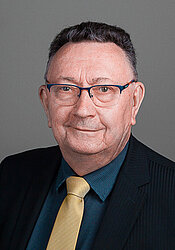
Prof. Juris Borzovs
Scientific Secretary