
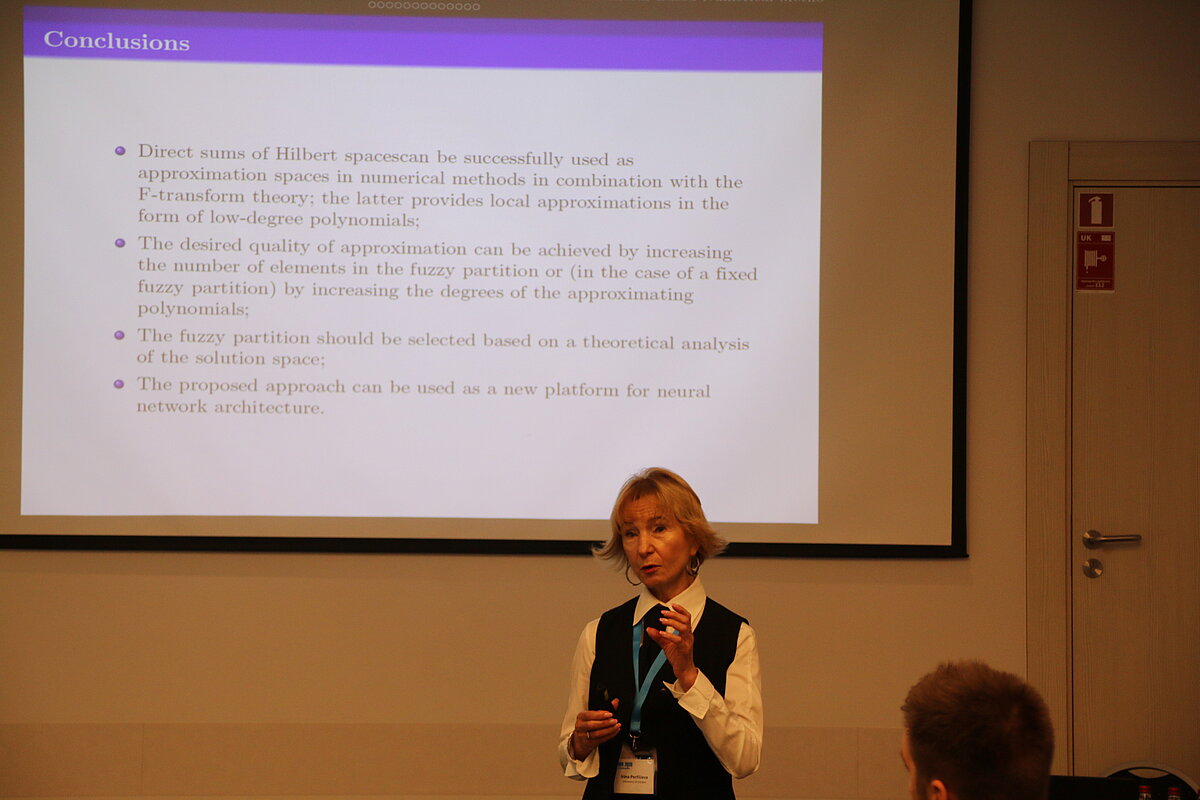
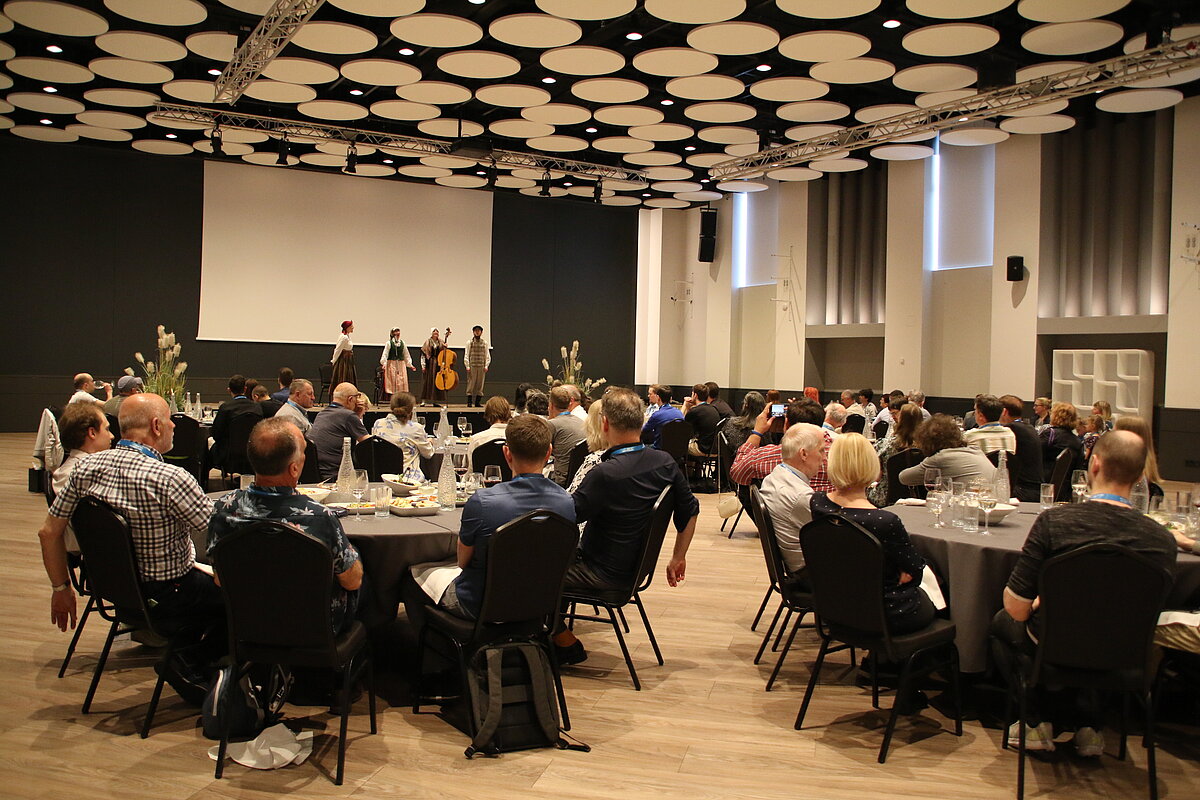
MMA is a long-running international conference that rotates annually among the three Baltic States. It brings together researchers working in mathematical modelling, numerical analysis, scientific computing, and related areas.
The scientific programme covered a wide range of topics in mathematical modelling and analysis, with a particular focus on numerical methods and their applications to current challenges in science and engineering. Key topics included numerical methods for mathematical physics and engineering problems, differential and integral equations, scientific computing, machine learning, data-driven approaches to modelling and control, fuzzy logic, inverse problems, and financial mathematics.
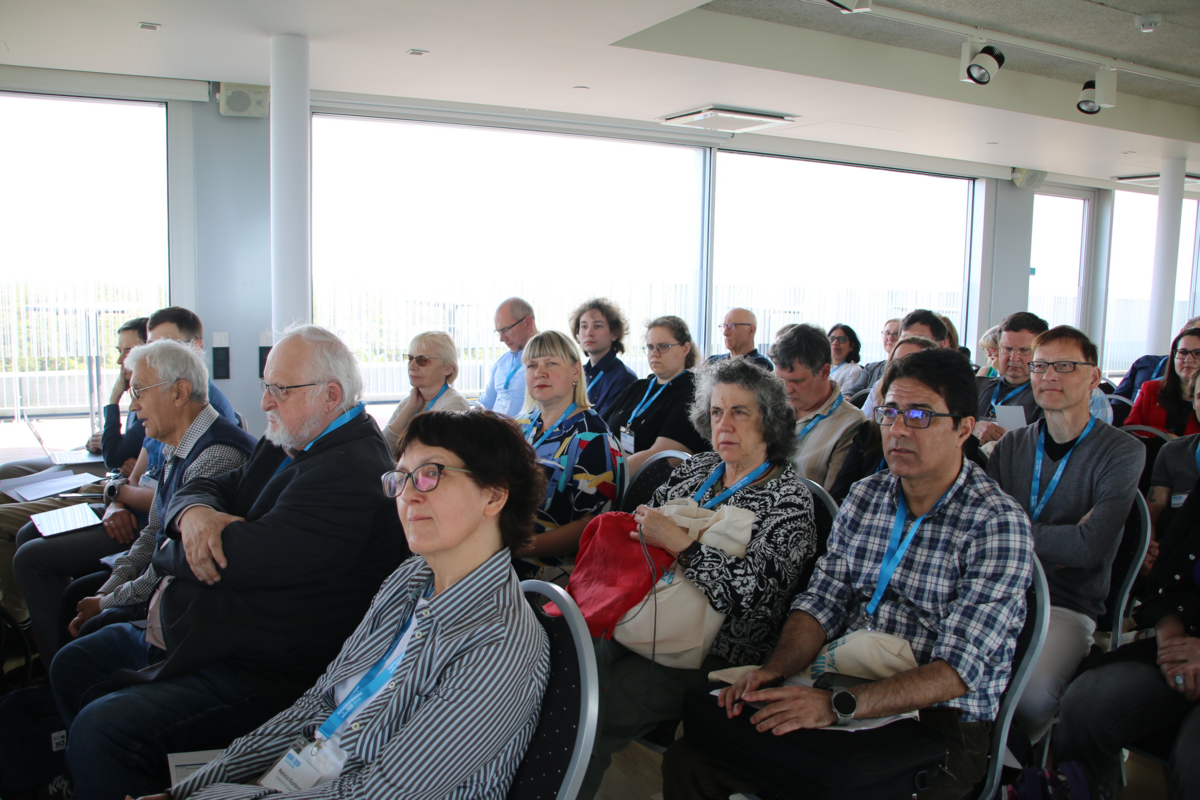
This year's conference attracted 94 participants and featured 76 submitted abstracts. The programme included nine plenary lectures delivered by leading international researchers.
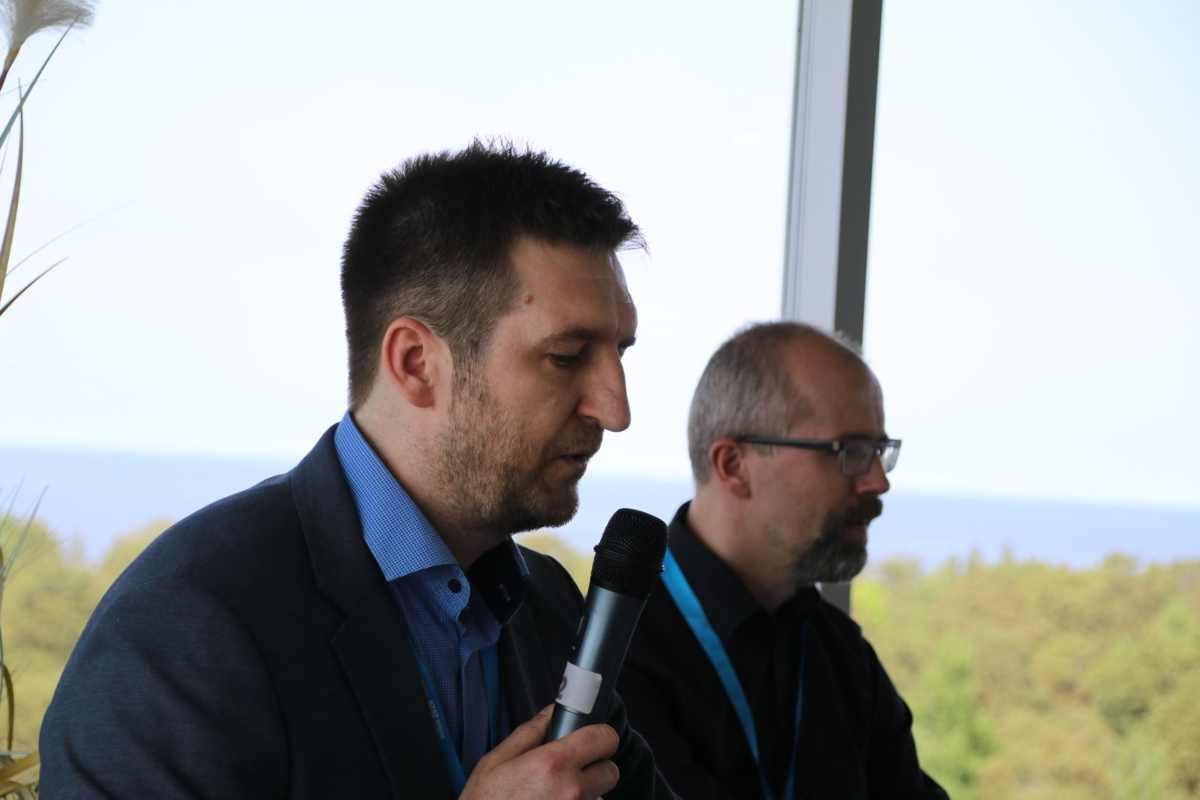
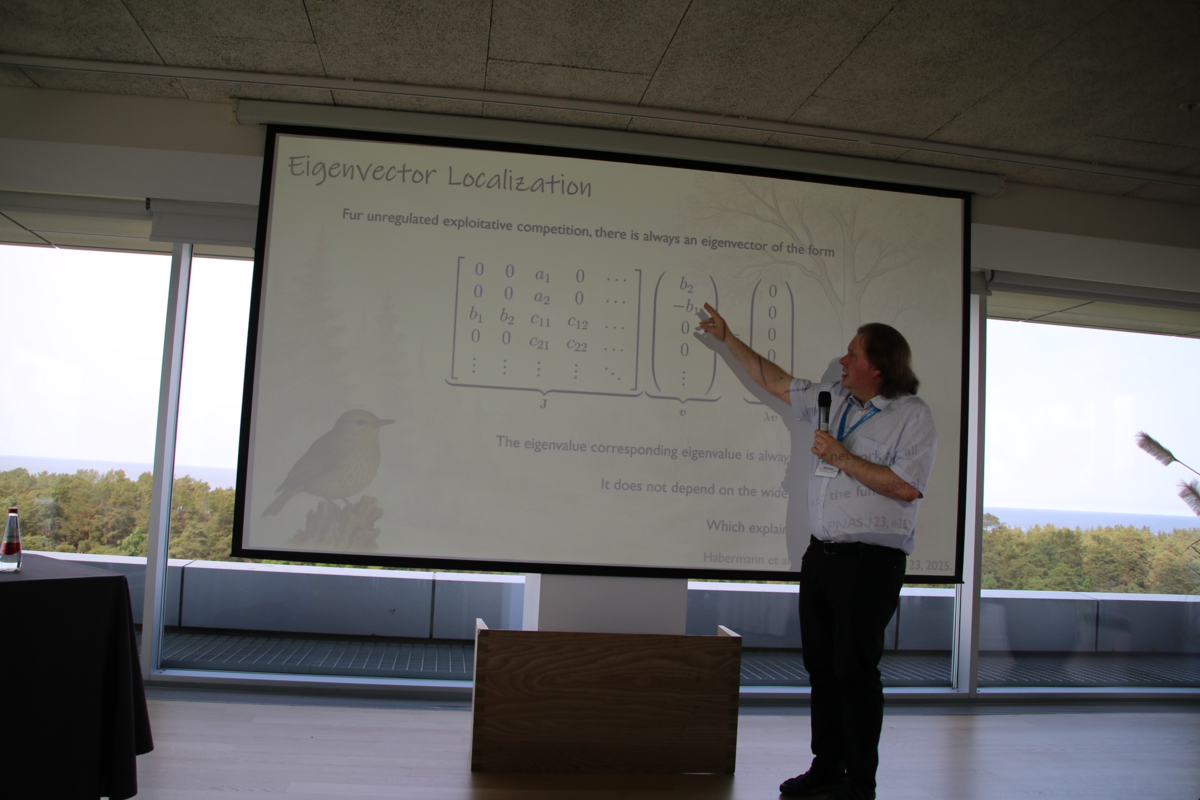
One of the plenary speakers was our senior researcher Dr. Jānis Virbulis from the Institute of Numerical Modelling. His lecture, "Modelling of Technological Processes – From Numerical Simulations to Digital Twins," focused on current numerical challenges in modelling technological processes and highlighted recent achievements within the University of Latvia Development Programme high-impact project "Neural Operator Development for AI Applications in Modelling and Scientific Data Analysis."
In addition to the regular sessions, MMA2026 featured four minisymposia:
- Partial Differential Equations: Spectral Problems, Existence and Asymptotic Analysis of Solutions
- Applications of Zeta Functions for Approximation of Analytical Functions
- Data-Driven Methods for Modelling and Control of Complex Systems
- Fuzzy Logic-Based Modelling and Analysis
The last two minisymposia showcased research being carried out within two ongoing projects at the Department of Mathematics funded by the Latvian Council of Science.
The minisymposium on Data-Driven Methods for Modelling and Control of Complex Systems highlighted recent results from the project focused on developing structure- and data-driven methods for analysing and controlling complex dynamical systems (project lzp-2024/1-0207). The project combines mathematical modelling, data analysis, and control theory to address challenges arising in complex systems.
The minisymposium on Fuzzy Logic-Based Modelling and Analysis presented progress within the project exploring fuzzy logic-based approach to the value of information estimation in optimal control problems under uncertainty with applications to ecological management (project lzp-2024/1-0188). The research aims to develop fuzzy logic–based mathematical models and methods for the adaptive control of dynamical systems under uncertainty in ecological management.
MMA2026 proved to be a great platform for presenting new research, discussing emerging challenges, exchanging ideas across disciplines, and building new international partnerships. Participants gave very positive feedback on both the scientific programme and the overall organization of the conference. The high-quality presentations, engaging discussions, and collaborative atmosphere all contributed to making the event a success and further reinforced MMA's role as an important meeting point for the international mathematical modelling community.
We would like to thank all participants, speakers, organizers, and supporters who helped make MMA2026 such a successful and enjoyable event. We look forward to welcoming the mathematical modelling and analysis community back to Latvia when the conference returns in three years.
. The conference was held in Jūrmala, Latvia, from 2 to 5 June 2026. )